
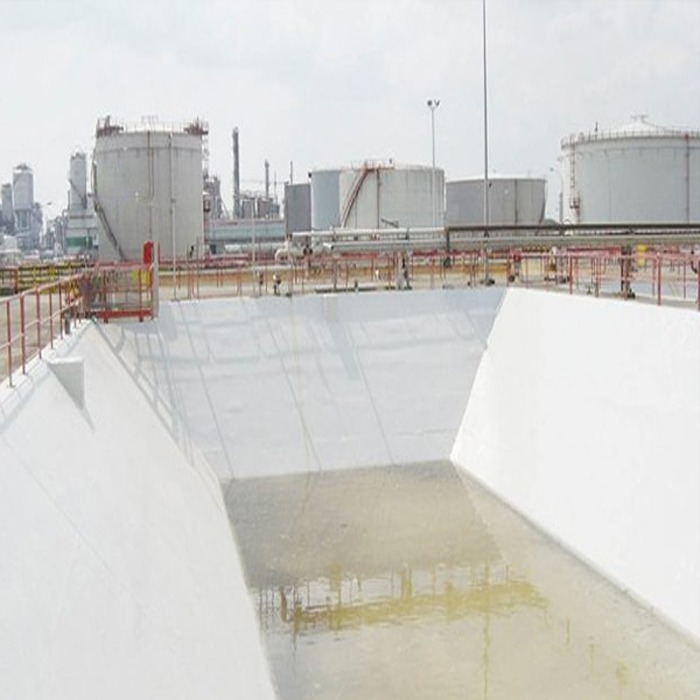
Description
High-Performance Acid & Chemical-Resistant Mortar
Vinyl Ester Resin Mortar is a premium industrial-grade acid-resistant and chemical-resistant mortar designed for bedding and jointing acid-resistant bricks and tiles in harsh chemical environments. It is ideal for tanks, chemical storage vessels, drains, floors, foundations, and pipelines, providing excellent adhesion to concrete, ceramic, and metallic surfaces for long-lasting protection.
Formulated for superior resistance to strong acids, alkalies, salts, and organic solvents, Vinyl Ester Resin Mortar can withstand high temperatures and aggressive chemical exposure, making it suitable for industrial floors, chemical storage tanks, and ETP plants. Its self-hardening, trowelable formulation ensures uniform application, high bond strength, and durable, leak-proof lining in demanding environments.
Key Features
Acid and chemical-resistant resin mortar
Strong adhesion to concrete, ceramic, and metallic surfaces
Resistant to acids, alkalies, salts, and solvents
Self-hardening and easy to apply for industrial lining
Applications
Chemical plants
industrial floors
ETP plants
storage tanks
acid-resistant linings
pipelines
Chemical & Temperature Resistance
- Excellent resistance to strong inorganic acids (including HCl, H₂SO₄), alkalies, chlorides, and solvents
- Good resistance to oxidizing chemicals
- Maximum service temperature: 120–140 °C (depending on chemical exposure)
Surface Preparation
- Substrate must be structurally sound, dry, and free from dust, oil, grease, laitance, or loose particles
- Concrete surfaces should be mechanically roughened to achieve good mechanical key
- Apply a compatible vinyl ester primer/membrane on the prepared surface prior to mortar application
- Ensure correct slopes and alignment before lining; adjustments are not possible after application
Preparation & Mixing
Vinyl Ester Resin Mortar is supplied as a three-component system consisting of Resin, Hardener (Catalyst), and Filler Powder.
01
Add the specified quantity of hardener to the resin and mix thoroughly
02
Gradually add filler powder while continuously mixing
03
Mix until a uniform, lump-free mortar consistency is achieved
04
Prepare only workable quantities due to limited pot life
05
Do not alter recommended mix proportions
Setting & Curing
- Self-hardening occurs due to a chemical reaction between Powder and Solution.
- Initial setting: 10 hours at 30°C
- Final setting: 24 – 48 hours at 30°C
- Full curing: 7 days at 30°C
- Ensure no water contacts the lining until fully cured.
Mechanical & Physical Properties
| Property | Value |
|---|---|
| Working Time at 30°C | 20 minutes |
| Compressive Strength | 500 kg/cm² |
| Flexural Strength | 150 kg/cm² |
| Water Absorption | < 1% |
- Liquid, catalyst self life 1.5 month at 27'C in close container
- Powder self life 2 year in dried condition at 27'C.
- Solution : 50 kg Carbo
- Powder : 25 Kg Bag
- Use personal protective equipment (gloves, goggles) when handling uncured mortar.
- Avoid direct contact with skin and eyes.
- Ensure proper ventilation during mixing and application.